

Аuthors
, *Moscow Aviation Institute (National Research University), 4, Volokolamskoe shosse, Moscow, А-80, GSP-3, 125993, Russia
*e-mail: a.fevralskih@gmail.com
Abstract
In bleed air systems of modern civil aircraft, preliminary heat exchangers (precoolers) cool the hot air taken from the main engine compressors. The problem of intensifying the thermal efficiency of the precooler without significantly increasing its overall dimensions is an urgent design task. One of the ways to solve it is to increase heat transfer by optimizing the flow path of the cold circuit. The aim of this work is a numerical study of geometric factors affecting the flow parameters in the purge circuit of a tubular air-to-air heat exchanger. The methodology is based on two-dimensional RANS simulation with closure using the k-ω SST turbulence model. The results show that the dependence of the reduced pressure drop on the flow rate is approximated by a power function 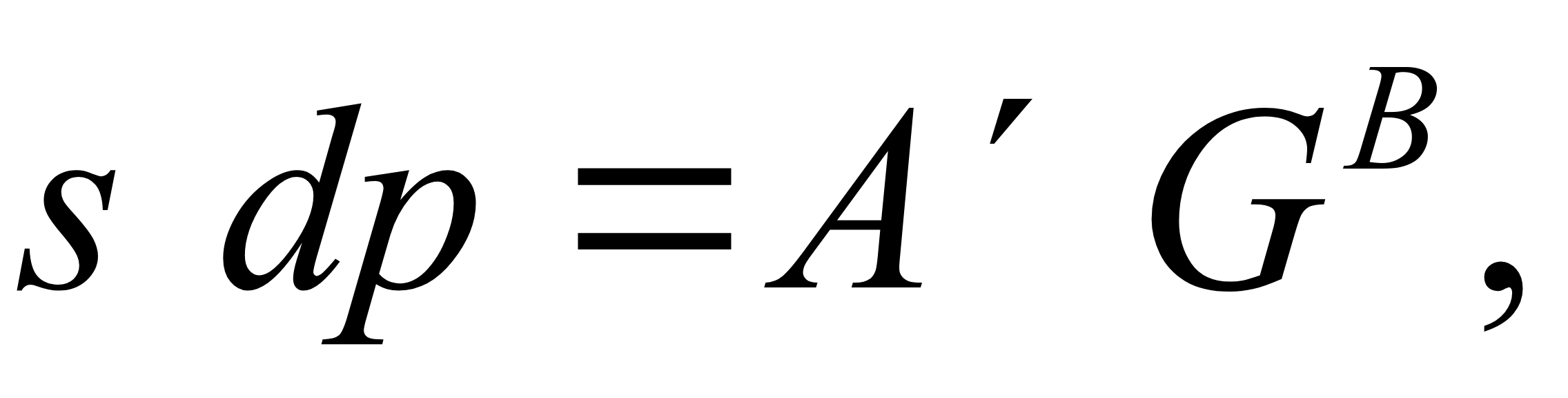 with B → 1,9, while the coefficient A exhibits a local minimum at a certain value of the relative elongation of the tube matrix. The paper presents the results of evaluating various configurations of the precooler matrix, both in terms of their hydraulic performance and heat transfer efficiency.
Keywords:
preliminary heat exchanger, precooler, bleed air system, numerical simulation, RANS, hydraulic resistance, heat transfer efficiency, optimizationReferences
- Strelets DYu, Smagin DI, Starostin KI et al. Improving the quality of air parameter calculation in passenger zones of a short-medium-range aircraft through the inte-raction of one-dimensional (SimInTech) and three-dimen-sional (Logos) software systems. Computational Nanotechnology. 2018;(4):35–40. (In Russ.).
- Smagin DI, Starostin KI, Saveliev RS er al. Methodology for creating a dynamic mathematical model of an inert gas system for an advanced aircraft in the SimInTech software. Computational Nanotechnology. 2018;(2). (In Russ.).
- Popov GA, Avtaev VA, Romanenko NG. The concept of using air conditioning systems as a component of the safety system. Oil and Gas Technologies and Environ-mental Safety. 2017; (2 (64)). (In Russ.).
- Tishchenko IV, Lavrov NA, Khutsieva SI. Creation of a dynamic model for testing the temperature control loop in an aircraft air conditioning system. In: Refrigeration and Cryogenic Engineering, Air Conditioning and Life Support Systems: Proceedings of the Third International Scientific and Practical Conference. Moscow: Bauman Moscow State Technical University; 2020. pp. 347–355. (In Russ.).
- Siluyanova MV, Popova TV. Investigation of a heat ex-changer for complex-cycle gas turbine engines. Trudy MAI. 2015;(80). (In Russ.).
- Baimetova ES, Koroleva MR. Construction of a hydrau-lic model of a heat exchanger. Proceedings of the Insti-tute for System Programming of the Russian Academy of Sciences. 2025;37(2):129-140. (In Russ.). DOI: 10.15514/ ISPRAS-2025-37(2)-9
- Matyushenko AA, Garbaruk AV, Menter F et al. Im-provement of the k−ωk−ω SST turbulence model for the calculation of flow around finite-span straight wings. Thermal Processes in Engineering. 2019;11(7):290–298. (In Russ.).
- Petrova NP, Tsynaeva AA. Numerical study of heat transfer in a heat exchanger channel with a pressure gra-dient. Thermal Processes in Engineering. 2019;11(12): 532–540. (In Russ.). DOI: 10.34759/tpt-2019-11-12-532-540
- Deeb R. Influence of relative longitudinal and transverse pitch on heat transfer characteristics of a staggered tube bundle with teardrop-shaped tubes. Thermal Processes in Engineering. 2022;14(2):74-84. (In Russ.). DOI: 10.347 59/tpt-2022-14-2-74-84
- Gureev MV, Ermakov AM, Zhukova YuV et al. Improv-ing the reliability of predicting the thermohydraulic char-acteristics of finned tube radiators for air-cooled power units based on numerical and experimental studies. Thermal Processes in Engineering. 2020;12(11):482–502. (In Russ.). DOI: 10.34759/tpt-2020-12-11-482-502
- Kupchik VS, Fevralskikh AV, Adamyan KI. Digital simu-lation of aircraft cabin depressurization. Trudy MAI. 2025;(145). (In Russ.).
- Fevralskikh AV. Digital design support for the aerohy-drodynamic configuration of a high-speed amphibious vessel. Herald of Computer and Information Technologies. 2025;22(1/247):35–41. (In Russ.). DOI: 10.14489/vkit.2 025.01.pp.035-041
- Computer models and simulation. Digital twins of pro-ducts. General provisions. State Standard R 57700.37-2021 (In Russ.).
|
mai.ru — informational site of MAI Copyright © 2009-2026 by MAI |